
If you’ve booked your first outdoor sauna session, chances are there’s a cold plunge involved. A loch, the sea, a ceramic bath or a plunge pod. And if you’re anything like me, that’s probably the part you’re most nervous about.
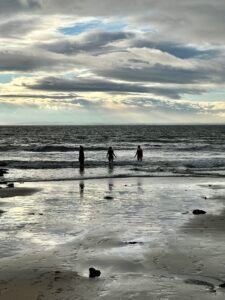
I never expected it to become my favourite part. My first attempt was a sea dip in February after a beach sauna, and I wasn’t prepared for how my body would react.
What I got it wrong on my first cold plunge
I had no technique, no idea what I was doing, and the North Sea to contend with.
I was wearing neoprene shorts and socks, which helped with the initial sting, but only so much. I waded in slowly — shins stinging, knees stinging — taking it inch by inch. I cupped handfuls of water and splashed it onto my arms and chest, trying to prepare my body for what was coming. It didn’t really work.
Eventually I waded out far enough to hunker down and go under. The moment I did, I felt that cold shock response straight away. My breathing became quicker and shallower, and it took a few moments before I felt back in control of it. Looking back, it seems a little naive, but I hadn’t given much thought to what would happen once I was actually in the water.
I was with a group of experienced wild swimmers and someone said, calmly, “just breathe.” I tried. It helped a little. But I was already in reactive mode — playing catch-up with my own body rather than going in with a plan.
I got out feeling surprisingly good afterwards though. But I also knew I’d made it harder than it needed to be.
If you’re curious, I wrote about that first sauna session in more detail in my first wild sauna experience.
Why I wasn’t prepared for the cold
That gasping, involuntary inhale isn’t weakness — it’s your body doing exactly what it’s designed to do. Cold water triggers a shock reflex that causes a sharp, uncontrollable inhale, followed by fast, shallow breathing. The Outdoor Swimming Society has a great explanation of the science behind it if you want to go deeper.
The problem is that fast, shallow breathing increases panic, which makes you want to get straight back out. The trick is to get ahead of it — before you go in, not after.
That’s what I learned the second time around.
The 3-breath method
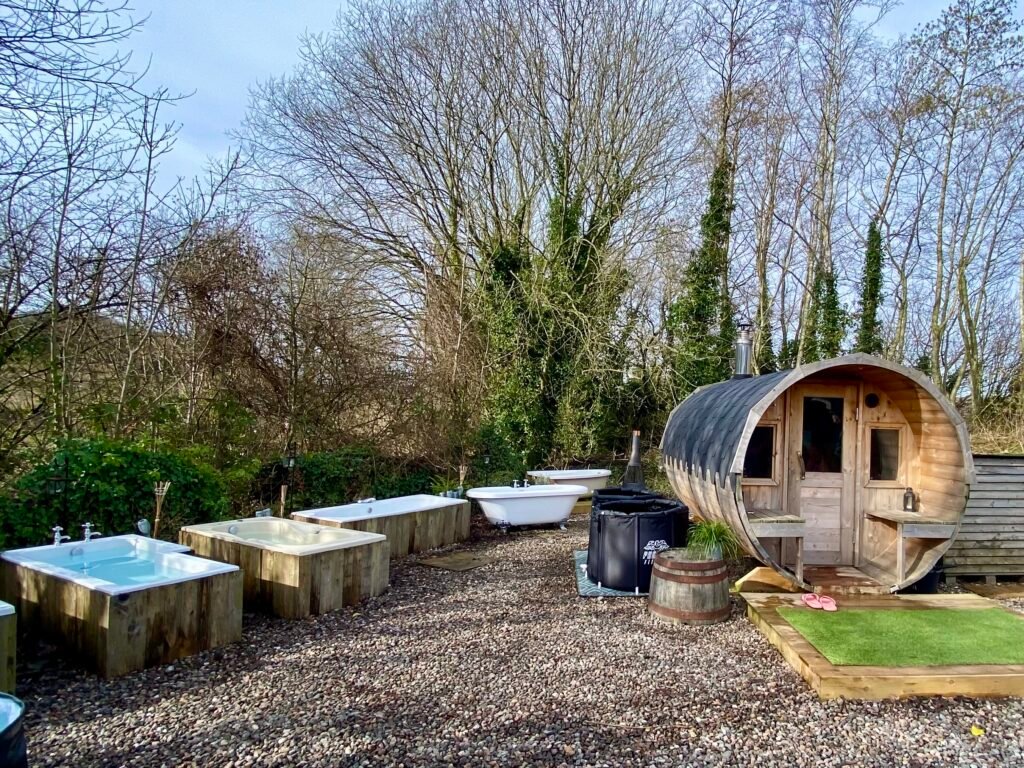
My second outdoor sauna was inland, with ceramic baths and a cold plunge pod. Before I got in, the sauna owner talked me through it — you can read about that session in full here. It was simple, it took about thirty seconds to explain, and I’ve used it every single time since.
The idea is simple: be fully in the water by the end of your third breath.
Each breath is one slow inhale through your nose and one slow exhale through your mouth. That’s one. You do three. And you use each breath to lower yourself a little further into the water, so that on that final long exhale, you go fully under — or to shoulder depth.
The exhale is the important part. You’re entering the water while breathing out, which helps counter the gasp reflex before it can take hold.
How to do it, step by step
When you’re ready, focus on your breathing rather than the cold.
Breath 1 — Inhale slowly through your nose, exhale slowly through your mouth. As you exhale, get your legs into the water.
Breath 2 — Inhale again, slow and controlled. As you exhale, ease yourself in a little deeper.
Breath 3 — Inhale. Begin your exhale. As you breathe out slowly, get yourself fully in — up to your shoulders. Stay in that exhale. Stay controlled.
You’re in. And your breathing is already slow.
It’s worth saying: you don’t have to go fully under first time. On my second visit I only went to my waist — the technique still works however far in you go. Build up at your own pace.
The difference it made
It’s still cold — I won’t pretend otherwise. The difference is that you’re focused on your breathing from the moment you enter the water, rather than the cold itself.
Concentrating on your breathing gives you something to focus on during those first few seconds, which makes the initial shock feel much more manageable.
Within a short time, that shock begins to settle and the water starts to feel more comfortable. A common rule of thumb is that once you stop noticing the cold quite so much, it’s a good time to get out and head back to the sauna.
What I enjoy most is the feeling afterwards. There’s a real sense of accomplishment in knowing you’ve done something you were apprehensive about and stayed calm while doing it.
It’s now my favourite part of the session.
A note on safety
Cold water carries real risks and it’s worth knowing the basics before you go in. The RNLI has clear cold water safety guidance, particularly if you’re plunging into open water like the sea or a loch rather than a controlled pod. If you have a heart condition or any health concerns, speak to your GP before trying cold water immersion.
Ready to find your first cold plunge?
Browse the Wild Sauna Guide directory to find wood-fired outdoor saunas across Scotland, most of which include a cold plunge option as part of the experience.
The water doesn’t get any warmer — but it does get easier. Before long, you might even find yourself looking forward to it.
Explore saunas across Scotland
Browse locations by region, with guides to help plan your visit.
Stay curious
New sauna spots, experiences, guides, and stories from Scotland’s outdoor sauna scene.